The small Canada was on Catchdale Moss this evening, with a huge flock of 503 Canadas, 74 Barnacles, 3 Greylags and 1 Red-breasted Goose.
Monday, 15 August 2011

Saturday, 13 August 2011
Cackling Goose Eccleston Mere?
There was a small race Canada Goose at Eccleston Mere this afternoon, with a flock of about 50 Greater Canadas. It was very small, it didn't look much bigger than a Mallard, and unlike it's larger cousins it had a dark breast.
The extreme small size and purply sheen to the breast seem to indicate that this is a Cackling Goose of the race minima, but if anybody would like to offer an opinion I'd be pleased to hear it. We do get the occasional Canada x Barnacle hybrid, but this seems pure Cackling to me.
It was unringed and could fly, despite the dodgy looking wing. It was slightly more nervous than the other Canada Geese it was with, but is still presumably an escape. Worth making a note of though, because the local Canadas often join up with the wild Pink-feet, and can turn up at various goose localities across North West England. The Red-brested Goose from Knowsley Safari park regularly sets pulses racing at Martin Mere in winter.


The extreme small size and purply sheen to the breast seem to indicate that this is a Cackling Goose of the race minima, but if anybody would like to offer an opinion I'd be pleased to hear it. We do get the occasional Canada x Barnacle hybrid, but this seems pure Cackling to me.
It was unringed and could fly, despite the dodgy looking wing. It was slightly more nervous than the other Canada Geese it was with, but is still presumably an escape. Worth making a note of though, because the local Canadas often join up with the wild Pink-feet, and can turn up at various goose localities across North West England. The Red-brested Goose from Knowsley Safari park regularly sets pulses racing at Martin Mere in winter.


Big movement of Swifts
A morning working at my computer proved productive. At least 200 Swifts passed the window, in groups of 5-10 birds, all heading south west. I've mentioned before about the frequent passage of birds over my house, always in a south west or north east direction, and this is yet more evidence. If you draw a line on an OS map from the centre of Carr Mill Dam to the centre of Prescot Reservoirs, not only does it go right over the centre of Eccleston Mere, it also goes right through my house, and if you extend it past Carr Mill Dam in the other direction, it goes right over Billinge Hill. Fieldfares, Redwings, terns, gulls, waders, Osprey, hirundines and Swifts, it's amzing how many birds seem to follow this line in one direction or the other. Some I suppose are just moving betweeen the dam, the mere and the reservoirs, but others perhaps are using it as a route to the coast.
Friday, 12 August 2011
Martin Mere
Martin Mere today, a family party of three Peregrines, a juvenile Marsh Harrier, Green Sandpiper, Greenshank, Barn Owl and a Tawny Owl sitting in the owl box near the United Utilities hide (below).


Sunday, 7 August 2011
Formby
August is the best time of year for a visit to Formby Point in my opinion. It's still summer and there are some good flowers to see, but there's a distinct hint of autumn in the air, and the wader passage has begun, with many birds still in full summer plumage, and there are plenty of terns and the chance of a passing skua.


The dune slacks hold many great flowers, including Round-leaved Wintergreeen Pyrola rotundifolia (right).


The dune slacks hold many great flowers, including Round-leaved Wintergreeen Pyrola rotundifolia (right).


Grass-of-Parnassus Parnassia palustris is locallly abundant and in full flower at this time of year.


Sanderling (left) and Sandwich and Common Terns (right).


Sanderling (left) and Sandwich and Common Terns (right).
Meanwhile on the beach there are large numbers of waders. I didn't have time for accurate counts today, but as a rough guide I estimate 3000 Knot, 2000 Dunlin, 500 Bar-tailed Godwits, 200 Sanderling, 50 Ringed Plover and 50 Grey Plover, many in summer plumage. Also at least 100 each of Sandwich and Common Terns.
Thursday, 4 August 2011
Wasdale, Cumbria
We camped for two nights at Wasdale Head, under the shadows of Great Gable, Pillar and Scafell Pikes, and perhaps more importantly, right next to the Wasdale Head Inn! We had a couple of downpours, but generally the weather was excellent for walking, and thankfully was clear (eventually) on the summit of Great Gable. It was pretty poor for birds to be honest, just the odd Wheatear and Raven, or the occasional unexpected Yellowhammer, but the flowers were quite good. There were scattered patches of Starry Saxifrage and Yellow Mountain Saxifrage, though the latter was almost over for the year, as well as Bog Asphodel, Juniper, Golden Rod, Alpine Ladys Mantle, Eyebright and Wild Thyme.


Bog Asphodel and Starry Saxifrage.


Yellow Mountain Saxifrage

The campsite at Wasdale Head.


Scafell Pikes and Wasdale Head from the summit of Great Gable.


Yellow Mountain Saxifrage
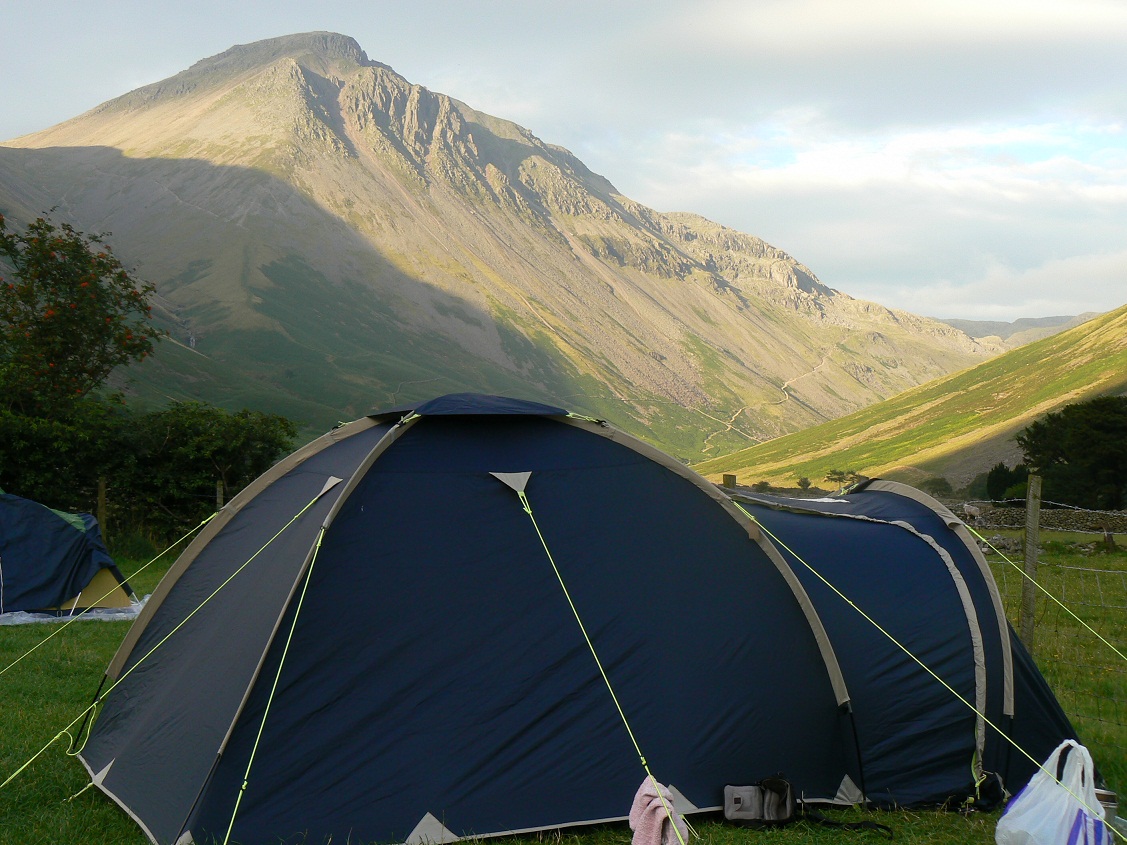
The campsite at Wasdale Head.


Scafell Pikes and Wasdale Head from the summit of Great Gable.
Monday, 1 August 2011
Backyard safari
The moth trap can attract some interesting creatures, not just moths!

Antler Moth, the 339th species of moth I have recorded in my little backyard. What a beauty!


Woodlouse Spider Dysdera crocata, a fearsome hunter of Woodlice which it catches by out running them, and the dreaded Harlequin Ladybird Harmonia axyridis, a highly invasive alien species which is apparently ousting our native ladybirds. The Harlequin has a whole website dedicated to it's rapid spread across the UK. Click here for more details.

Antler Moth, the 339th species of moth I have recorded in my little backyard. What a beauty!


Woodlouse Spider Dysdera crocata, a fearsome hunter of Woodlice which it catches by out running them, and the dreaded Harlequin Ladybird Harmonia axyridis, a highly invasive alien species which is apparently ousting our native ladybirds. The Harlequin has a whole website dedicated to it's rapid spread across the UK. Click here for more details.
Subscribe to:
Posts (Atom)